Monday, September 24, 2007

Welcome to Punkville

From Angela Jaeger: Can punk become an ideal to live by in a post-modern global community?


Go, Angela! Tell it like it is! That's why I'm writing this column now. The ideals you mention are clear to punk bands all over the world, united by their urge to change things like the ongoing rape of the planet or the unfair system they're living in (and they're all more or less unfair, except maybe Scandinavia and the Netherlands.)


It's like Punk is a huge encampment, call it Punkville, sheltering various bods who'd maybe never meet if they didn't all dig hanging out there. Some move in permanently, others drop in for a weekend, but they all have Punk stamped somewhere on their personal, intimate profiles. Rabidly anti-materialistic crusties living off the grid, fashion designers nostalgic for their wild youth, (or still wild,) vegan bakers, Professors yet, and of course musicians, including artists who aren't obviously punk, like Michael Franti and Manu Chao. Punk bands identify with the outsider, the oppressed -- that's why Bob Marley's more punk than, say, the lovely lads of The Police, who are more likely to be filed under Punk. Punk-ish bands exhibit varying degrees of commitment to the real ideals of punk -- but if the thin boy singer has artful holes in his clothes and wears black eyeliner, it's a fair bet he's punk-identified. How punk are they really? More on the punk-o-meter in the next question from Eric....



More Punk 


Punk-ish 


From Eric Siegel: Do you think there's a band that doesn't deserve to be called punk and a band that does?


A great and challenging question, Eric. Thanks. If punk is in the heart, as I believe, then I stick to identifying bands as "punk" primarily where they offer not only energy and attack, but also some sense of social engagement and a desire for change. That narrows the field and I would love readers to write in and let us know which bands are inspiring them right now. MIA's music is cosmopolitan and danceable but also angry and thoughtful. She's very punk. Good Charlotte rock the punk tattoos, smeared eyeliner and jagged Mohawks, but their music is power-pop. They mock the rich on "Lifestyles of the Rich and Famous," but I wonder if singer Joel Madden feels the contradiction now he's a full-on tabloid celeb? Ah, how to still be angry while you're sipping champagne in your Jacuzzi! Always a problem! On "World Is Black," G.C. bemoans the state of the planet; still, their approach is more in tune with emo's all-about-me meanderings. So they give solace to many, but Good Charlotte ain't as punk as they look. 


Punk via Sri-Lanka 


Is this really punk?  Or does it just dress like it? 


Angela and Eric, thanks for your questions. Keep ‘em comin'!


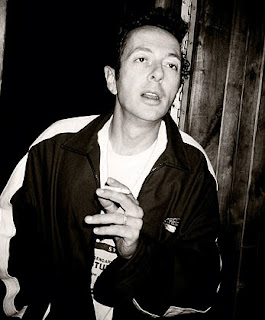
Lastly, a big Punky Birthday 2 U to www.punkcast.com for their tenth anniversary. Founder and videast Joly is a true punk legend, uncompromising and quite a visionary. A New Yorker for some 22+ years, Joly's imprint, Better Badges, were first to use the humble badge as a guerilla medium in London in the first wave punk time. I always remember his Patti Smith badge, the first time that she and her band, including Lenny Kaye and the dear departed Richard "DNV" Sohl, hit the UK. The Patti Smith people were some of the few original US punks to identify with reggae and dub, so Joly put her distinctive profile on a red, green and gold badge that went everywhere and said it all. It's amazing how Joly is still always down with the key underground action; he got some of the last footage of Joe Strummer when he visited NY with the Mescaleros, and the first of bands like the Yeah Yeah Yeah's.


The Yeah Yeah Yeahs image courtesy of Joly


Being a bit of a mathematical and technical whiz, Joly was hot on the internet while it was still obscure boffin stuff, and typically, got the potential of the new medium. He's been recognized in the Village Voice as an indispensable New Yorker, and recently both Wired and Rolling Stone rated punkcast among the hottest video podcasts. When I teach Punk at NYU's Clive Davis Department of Recorded Music, I always ask Joly to come in, bring some of his fanzine collection and tell us how it really was and is. Big up Joly in Punkville!



Sunday, September 23, 2007

Marley's 'Exodus' 30 Years Later - (NPR)

"Thirty years ago, reggae superstar Bob Marley released his highly acclaimed album "Exodus."

Veteran music journalist Vivien Goldman says it was a response to a politically motivated attempt on Marley's life.

Farai Chideya talks with Goldman, author of The Book of Exodus: The Making and Meaning of Bob Marley and the Wailers' Album of the Century."

Click here for the interview!

Tuesday, August 28, 2007

Lost Women of Rock FOUND!

From Pedro Marazzi: What is your view of modern-day punk bands? Particularly those we in the US are subjected to. In the UK there was deemed to be three generations of punk bands. The first generation, which you seem to belong to, being Pistols, Clash etc. Generation 2 being Stiff Little Fingers, Ruts etc. Generation 3 being Anti Nowhere League, Exploited etc. Due to my age I came in at Generation 2 and initially felt like I'd already missed the party. First generation punkers tend to be too easily dismissive of most punk that followed, probably due to less originality. What is/was your view?

Thanks for the astute question, Pedro. Your breakdown is very precise 'specially as the waves you mention came quite close together. But who do you think is less original -- the late-wave musicians, or the people (not) listening? I'm assuming you mean the musicians, in which case I'm glad you dig the under-appreciated Ruts. If only their wonderful singer, Malcolm Owen, hadn't OD'd on heroin so young... he was gorgeous and had a great intensity that was very compelling and seductive but seems to have burned him right up. You're probably right anyway, Pedro, in that seeing any style, e.g. punk, coming round the cultural conveyor belt yet again can prompt yawns from the been-there, done-that dudes. Not those neck tattoos AGAIN?

There's also the nostalgia factor -- people get all smooshy over the music they first snogged to. So it's partly too-blasé-to-bop, and partly that original punks like the Clash had a commitment that still inspires people.

But the sign of a lively mind -- crucial to punk - is not to get locked into one era. Keep cruising for compelling voices! Lily Allen is this column's reigning Punky Reggae Princess; Tanya Stephens is our Rebel Queen; and the mighty Manu Chao, whose new album La Radiolina, breaks a six-year silence, is the artist Joe Strummer would have liked to be. So it's never all hopeless, even when it's a bit grim.


Image courtesy of Blake Zidell.


In the Wailers dressing room after their fantastic, packed out show at the High Line in Manhattan, Tré Cool from Green Day, a huge Wailers fan, was there to big up the band with his super girlfriend, Sarah Belger. He insisted on having his photo taken with the Punk Professor and bass legend Aston "Family Man" Barrett, and rather impressed me with his glee at how the band's smash hit, 'American Idiot' had distressed President Bush.


Drummie Zeb, Tré Cool, Punk Professor,
Aston "Family Man" Barrett. Image courtesy of Sarah Belger.


Emotion and excitement bubbled like the champagne at the lunch in London's hip Portobello Road that writer, artist and activist Caroline Coon put together for 'The Lost Women of Rock Music: female musicians of the punk era,' (Ashgate Books) by Dr. Helen Reddington. It was old home week for first wave punk rock grrrlz, and British punk legends, Lora Logic, and her old bandmate in X Ray Spex, Poly Styrene, were both there with personality-packed daughters! There were also various MoDettes, Belle Stars, and others.


The Punk Girls' Token Bloke: keyboard player Steve Beresford,
Slits bassist Tessa Pollitt and Slits manager Christine Roberston.
Image courtesy of Vivien Goldman.


 Tessa Pollitt (the Slits), Christine Robertson
and Jane Crockford, bassist for the Mo-Dettes.
Image courtesy of Shirley O'Loughlin.


(left to right) Ana da Silva (drummer for the Slits), the elusive
Lora Logic (saxophone for X-Ray Specs and solo artist),
Gina Birch (bassist for The Raincoats), Jane Crockford.
Image courtesy of Vivien Goldman


Caroline gave a great speech, which you will be able to see a bit of right here (coming soon!). The author used to play in a Brighton punk band called The Chefs as Helen McCookeryBook. Classic punk rage at how girl punk musicians have been ignored and written out of history -- see, that's why it starts with "his"! -- inspired Helen to write this valuable book. It began as an academic thesis but will reach much further.


Vivien Goldman (aka Punk Professor), Dr. Helen Reddington
and Caroline Coon. Image courtesy of Kieron Tyler. 


The seriously cool guys, like Kurt Cobain, who championed the Raincoats, and Sonic Youth's Thurston Moore, do get the greatness of the girls. Supported by London's original punky reggae female rockers, the Slits, Sonic Youth performed the whole of their 'Daydream Nation,' at McCarren Pool, a hipster hangout in Williamsburg, Brooklyn. Onstage Moore hailed up the Slits and called Ari Up "My hero!" Although Thurston later humbly said "I just kept my head down and tried to get through to the end," the show really felt like a journey, epic and emotional. Kim Gordon is a sultry, brooding rock star, with a fluid, forceful bass style, who scores double 'cos guys love her and the females in the audience all sense she's a sister.


    Kim Gordon, Thurston Moore, unidentified woman and
Ari Up (The Slits). Image courtesy of Peter Remke.


  The eternally cool Kim Gordon (Sonic Youth)
Image courtesy of Peter Remke.


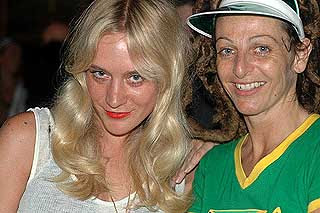
The audience had never seen anything like the Slits, who played many of their old school gems like "Typical Girls" and some of their newer material, too. Sadly, the listings were wrong so keen Slits fans like the girls of "no age jungle riddim vendors", Gang Gang Dance, missed them. Backstage, GGD's Lizzi Bougatsos and Jess Holzworth introduced their own sister in punk, the smashing actress Chloë Sevigny, joking, “She's a star!" Nice Chloë practically crawled into the room in a major just-a-regular-gal attack! They're old friends and Slits fans forever.


Chloë Sevigny with Ari Up (The Slits)
Image courtesy of Peter Remke.


The new generation of Slits, like Hollie Cook, keep the vibe alive. Hollie is original punk rock royalty as her father's Paul, the drummer of the Sex Pistols, and her mother is Jennie of the Belle Stars, who was in great form at the Women In Punk lunch. You can also hear Hollie on 'Milk And Honey,' the single from a new release that I love, called "Survival of The Fattest: Battling the forces of evil with hippy reggae," by Prince Fatty. It's the new project by Mike Pelanconi, the producer/engineer who made the smash "Alright, Still," with Lily Allen.


Image courtesy of Mike Peloconi


Hollie Cook (The Slits).
Image courtesy of Peter Remke. 


Hollie Cook (The Slits).
Image courtesy of Peter Remke. 

Monday, July 30, 2007

Your Questions Answered!

READER QUESTIONS ANSWERED


This week’s session is a little different as it's more of a chat between us; call it a think tank if you like. Keep sending those questions and at regular intervals, we'll just devote a column like this to filling in those blanks, as well as the regular answer-per-column business.


1) From Lindsay Tulkoff: I love punk - I really wish I had been around back then. How come punk in the United States wasn’t as political as it was in Britain?


Thanks, Lindsay. I can tell you, those were some wild times, and though there was a lot of beating-up type of violence, guns were not involved – which I noticed in recent trips to my home town, London, is sadly not the case today. Kids killing kids has become a grisly reality. But more of that another time, and I’m curious about readers thoughts/questions on violence and punk.


There’s a school of thought that insists that EVERYTHING is political – in which case, The Ramones singing 'Sheena Is a Punk Rocker' or Blondie singing 'Denis Denis' has as much political weight as the Pistols' 'Anarchy In The UK.'. But you’re right in that UK punk was a vehicle for expression about the extremely messed-up state of Britain at that time. Unemployment was at a new high, and it seemed like the old systems had crashed completely. There were constant strikes by the unions – which Margaret Thatcher would soon de-fang, for good or ill, just as punk was segueing into post-punk. Power cuts lasted for days, garbage frequently piled high in the streets, and IRA bombs could explode anywhere, any time.


Debbie Harry of Blondie


The Ramones 

Jon Savage’s photos which we ran recently, were an amazing reminder of how my old ‘hood, Ladbroke Grove celebrated by the Clash as The Sound of the Westway (a motorway that sliced through the area)– used to look as if the wartime Blitz was still going on, with its many vacant rubbish-strewn lots fronted by dented corrugated iron. Now the area is totally posh and some of the most expensive real estate on the planet. In short, London in the mid-70s was rich in the sort of anger Johnny Rotten expressed on the Pistols’ last ever show, in San Francisco, when he famously shouted, “Ever get the feeling you’ve been cheated?” With the old British Empire gone, and the ebullient 1960s sense of abundance shriveled, there was a sense of Year Zero, that pride in English identity was a joke. And kids round the country were keen to mouth off about it, resulting in the wave of political music that means a lot to you & many others.


The Sex Pistols 


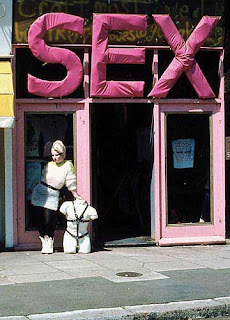
 The boutique run by Malcolm McLaren and Vivienne Westwood
 
 
But there was much to vent about in America, too – why didn’t it happen here? I think partly because as punk was beginning, the Vietnam War was just trailing to its ignominious close. I get the feeling that kids here at that point were OVER protest in music, as a reminder of the boring bad old days. It meant hippies, folk music. It was seen as being too earnest and serious. Instead there was a thrill in being what I call perma-teen – embracing the zany, sometimes surreal, endless adolescent fun and escapism embodied by The Ramones’ cartoon persona.

And what do you, dear punk reader, think of the other aspects of American punk? Let me know.


2) From Joyce Crowley: Where did you meet the Clash and what is Paul Simonon like?


The way it was for me was the way it can be in any low-rent, high-skills community of artists. The Clash were a local band – Joe Strummer started out playing in the Elgin pub across the road from my house in the 101’ers - and I was a music journalist. Just like in, say, the tight knit SF punk scene, or the CBGB’s crowd in NYC’s pre-gentrified Lower East Side, there were none of today’s barriers between artist, fan and media pal. The famous incident where my fellow scribe Nick Kent was punched out by the volatile Pistols' bassiist, Sid Vicious is less likely to happen now that VIP rooms isolate artists from their audiences in all but the punkier venues. Stay punk! (But skip the punch, preferably.)


CBGB'S 


What is Paul Simonon like? In many ways, Paul IS the archetypal punk, in that one of the first times he ever picked up a bass was onstage with the Clash. After being taken on by Joe Strummer and Mick Jones, it was pretty well acknowledged that though he had zero bass playing experience, he more than made up for it with his style and impressive cheekbones. Paul was really the visual artist of the band, (as well as the in-house heartthrob, -- his dramatic fling with Patti Smith, who he met when she jumped onstage with the Clash at a gig, was one of the first collaborations between Anglo-American Punk.) His early canvases, particularly one grey and brown-toned landscape of a car dump, indicated his visual taste was just as raw and punky as his first bashes at bass. He was largely responsible for Clash fashion statements like the words stenciled up the legs of his flight suit; and the paint-spattered look inspired by Jackson Pollock’s drip paintings. Now, Paul plays with the Gorillaz' Damon Albarn in The Good The Bad and the Queen, and the rest of the time, he's the fine art painter he first set out to be.


Paul Simonon/Cover of The Clash's London Calling album 


3) From Devin Farrell: Do you agree with me that the U.K. is better than the U.S.? (I live in the U.S.)


Thanks for that neat philosophical query, Devin. You may have guessed that I’ve lived and still move between both great nations, and I can tell you that ultimately, everywhere has its advantages and disadvantages. One distinction that I have observed: the English generally tend to prize eccentricity more than Americans, which partly explains why punk flourished there.


4) From Edward Arthur: 1) Whatever happened to Ed Bahlman? 2) Did PUNK really start in the UK?


If anybody reading this knows a number for Ed Bahlman, do let me know. Does Bahlman owe you money, Other Ed? Or are you simply a fan of Ed’s late 70s-early 80s label, 99, on which I was an artist along with ESG, Glenn Branca, ETC, all now regarded as musical post-punk pioneers. The spacey NJ?? Funk of all-girl trio, ESG, is now on the road again – this time, with their daughters! -- and Glenn is a busy composer. Thus the artists Ed signed are all present and correct, but – where’s Ed?


Glenn Branca 


And a very interesting question from Pedro Marazzi: What is your view of modern-day punk bands?


Particularly those we in the US are subjected to. In the UK there was deemed to be three generations of punk bands. The first generation, which you seem to belong to, being Pistols, Clash etc. Generation 2 being Stiff Little Fingers, Ruts etc. Generation 3 being Anti Nowhere League, Exploited etc. Due to my age I came in at Generation 2 and initially felt like I’d already missed the party. First generation punkers tend to be too easily dismissive of most punk that followed, probably due to less originality. What is/was your view?


TUNE IN NEXT TIME FOR THE ANSWER TO PEDRO'S QUESTION -- AND ASK ME ANOTHER....

Monday, June 18, 2007

Punky Hippy Party


Your Reader Questions Answered!
 
From Kurt: “Ok, so I've seen the Sex Pistols reunion tour, the Gang of Four reunion tour, the Slits reunion tour. I saw Wreckless Eric last year, reuniting with himself I suppose. All but one was great. My question, Punk Prof, is this: do bands owe us anything when they get back together? Are there right or wrong reasons to do it, or is it all just their own flippin' business?”
 
Punk band reunions puncture society’s fond delusion that fresh creativity is the prerogative of the under-25s. Somewhat to their surprise in many cases, these bands realize that there’s a market for these reunions with their old bandmates/frenemies, and it strikes a chord – particularly as many of these musicians had found themselves adrift, forced to acknowledge that their sum really had been greater than their own egos. However, for both musician and audience, these shows usually wind up being quite powerful events, more than mere nostalgia. If the artist has given up playing in the interim, they’re bound to fall in love with playing all over again, a sensation vividly captured in “New York Doll,” Greg Whiteley’s documentary on Arthur “Killer” Kane of that band. Seeing the Sex Pistols reunion was remarkable as now their playing had improved so they sounded as good as the polished sound coaxed by Chris Thomas, the producer. When I wound up jamming onstage with the Slits at their reunion, it was frankly a thrill that bass player Tessa Pollitt and singer-songwriter Arri-Upp had found a new crew of junior Slits, who were obviously the band’s artistic progeny, with their dub influence and white girl dreads.
 
It’s a given that there’s a Pavlovian fascination with the music we first XXXed to (insert your favorite wild thing here,) in our childhood and adolescence, which in many cases is transmitted to the offspring. Thus the many families attending the recent Roger Waters concert in a Jersey Arena, generations singing and playing air guitar together along with his band’s performance of the whole ‘Dark Side of the Moon,’ the hippy magnum opus Waters recorded with the band he co-founded in the 1960s, the Pink Floyd.
 
In short, old punk bands, LIKE OLD HIPPY BANDS, deserve a chance to grow, just like everybody else. These shows can fire memories and inspire the next generations.
 
Hope this answers your question, Kurt. Thanks for asking.
 
 
OK, you in the back there, I’m wondering why your essay on the tension between punks and hippies has no words, and what exactly these sixty-four drawings of brightly colored safety pins and skulls actually mean? You say this is the result of three solid weeks of original research? Oh, I see. You were switching between LSD and amphetamine to compare and contrast punks’ and hippies’ drugs of choice, and this is your response. Well, I’m afraid your research will have to be a bit less original, unless you want your grade to be @@###?”///. Consolation: that grade may not get you a degree, but it’s like an invite to the Punky Hippy Party.
 
Roger Waters kept the Pig in the Pink Floyd divorce
 
Yes, Bob Marley sang about the Punky Reggae Party, to which the Clash and various other punks were invited, along with the Wailers. “No boring old farts will be there,” promised Marley, and many listeners assumed that he must be referring to the Pink Floyd and their ilk – the dinosaur 1960s superstars who had dominated the charts, it was felt, for far too long. Nobody sang about the Punky Hippy Party -- not till this column, anyway. The whole point of punk, or so it seemed at the time, was to sweep away what was seen as the deluded idealism and annoying naïveté of hippies and replace it with punk’s gritty realism.
 
Jon Carin with Punk Professor: Both factions of the old Floyd love this multi-instrumentalist and punks do too
 
“Punks hating hippies? That was all a load of rubbish,” declared Jon Carin firmly, helping himself to some moules in the leafy garden of a West Village restaurant. An hour before, the brown eyed multi-instrumentalist had been onstage in front of twenty thousand people at a New Jersey arena, backing Roger Waters, the co-founder of Pink Floyd. “John Lydon and Steve Jones (ex-SexPistols,) Captain Sensible (Damned) – I’ve got them all tickets to our shows.”
 
And Carin should know. Taken on by the supergroup while he was still in his teens, due to a particular combination of talent and personality, he is now the only musician invited to shuttle back and forth between Waters and Dave Gilmore – the two feuding ex-Floydies who each tour the world with their own representation of that august catalog. Reggae has paid Dark Side of the Moon the ultimate tribute with a great favorite of mine, the Easy Star All Stars’ “Dub Side of the Moon,” but the original version still sounds strong. It was a gas to watch that familiar Floyd emblem, the big pink graffiti’d pig, float overhead—Waters reserves his ripest anti-Bush insults for the pig’s plump rubber rear and the graffiti are altered according to issues relevant to each concert’s location, Carin explains. Being immersed in the big sound of LEGENDARY SINGER, P.P. Arnold, the guitar stylings of original pop icon, the Amen Corner’s Andy Fairweather-Lowe, plus their sophisticated mini-movies and psychedelia, was a delicious sensation. A handy reminder of why, though punk happened in stinky cellars, I’d have quite liked IT to be bathed in irridescent colored lights.
 
Though Waters’ political analysis in songs like Leaving Beirut, is a touch lacking in nuance, the timing of its performance sent a shiver down my spine. While Waters was emoting against a superb backdrop of oversized cartoon frames telling the story of how a nice Arab family rescued Waters when he was a lost hitchhiking student, my hostess, super Punky Mummy, fashion PR Oberon Sinclair-Carin, showed me the latest war death updates on her mobile phone. Seems like the fight for different IDEAS of peace has an even longer shelf life than the Pink Floyd’s canon.
 
And you in the back there, staring obsessively at a blank wall.  While you're busy opening the doors of perception, don't forget to close the classroom door on your way out, as this lesson is actually over.  The other students are all gone - and so, it would seem, are YOU.  REAL GONE.

Friday, June 15, 2007

Punky Hippy Party Continued


Aha! A special welcome to you in the back there. After the last class, the Psychedelic Roger Waters/Pink Floyd session, when everyone else had gone and you just sat there watching mental television on the blank wall, I wasn’t sure you’d make it back intact. What was that? On your trip you lived through the last hundred years of your family tree? Well, in that case, you’ve got a head start on today’s class as we’re still looking at the 1960s; a decade whose influence remained strong in the 1970s, even though lots of Punks said it was all a load of bollocks. We will see that the Hippies’ ideas of Peace and Love were actually not that different from the Punks' Search and Destroy; because both generations were fighting in their own way for a more honest society.
 
“Summer of Love, Remembering the 1960s”, a show at the Whitney, is a reminder of why that decade still fascinates. Musical entertainment at the opening soiree, which I attended with Punky PR Mummy, Oberon Sinclair-Carin, was provided by hippy bard, Donovan, who swung his way through favourites like Mellow Yellow. His hair still in artless ringlets, the genial Donovan confided to us that he always watches BBC America when he’s in the US, and that his stepson with wife Linda, whose father was the late Rolling Stone Brian Jones, is obsessed with old school reggae.
 
 
Gene Anthony – Hippies on the Corner of the Haight. Image courtesy of the Whitney Museum of American Art
 
Mati Klarwein Aleph Sanctuary View. Image courtesy of the Whitney Museum of American Art
 
The exhibition’s focus on entertainment, music and underground art like British comic book, Oz, make it a magnet for music people. Among the swinging gear on display: Richard Avedon’s famous oversaturated color images of the Beatles, looking as if they were Indian deities; Patrick Litchfield’s shot of the newly married Mick & Bianca Jagger in a Rolls, she the height of Biba and Ossie Clarke chic in her white floppy hat, both imperious in their beauty, like they were off to honeymoon in Olympus. I adored this expo. For me it LITERALLY hit home, particularly as it showed London murals that I vaguely recalled from my early childhood, like the wall of Granny Takes a Trip on the King’s Road, very near where Vivienne Westwood and Malcolm McLaren would open the shop Sex, the home of punk, a decade on. A stellar Sixties crew of artists includes paintings, photos, sculptures and installations by Richard Hamilton, Mati Klarwein (of Santana sleeve fame,) Jimi Hendrix, Lynda Benglis and Andy Warhol, among others, and the show was organized by Christoph Grunenberg, director of the exhibition's originating museum, the Tate Liverpool.
 
Gene Anthony photo of beat generation icon Ken Kesey. Image courtesy of the Whitney Museum of American Art
 
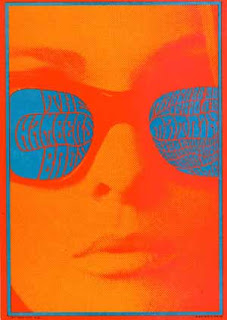
Victor Moscoso Neon Rose 12. Image courtesy of the Whitney Museum of American Art
 
It was a joy to experience once more the elaborate rococo Edwardiana, the lush decadence of the illustrations inspired by Aubrey Beardsley and the organic voluptuousness of Art Nouveau; all those pre-Deco decorative flourishes which came to seem redundant when minimalism and its spawn, the color taupe, took their wraithlike hold on the design world. Though it skipped a couple of generations, it struck me as I tripped (hoho) past the warning for epileptics and those of a sensitive disposition and entered the exhibition’s strobe room, how it felt like an Ibiza house rave, from the 1980s through to today. That psychedelia never really went away. But it’s often said that the political awakening and awareness that the 1960s have come to represent got lost somewhere round the 1980s Greed Is Good era and never quite returned. Still, hiphop, whose birth paralleled punk’s in the 1970s, has always had a strain of conscious activism duking it out with the taboo vocabulary and mutely gyrating “video ho’s”. Hiphop guru, Russell Simmons has had to busy himself with more than one culture battle recently. The Don Imus debacle has seen Simmons align himself with a purging of hiphop’s crasser gangsta aspect; and the brazen inequities of the Rockefeller Drug Laws have prompted him to tackle the government directly, as Lockdown, a new documentary directed by Michael Skolnik and Rebecca Chaikin, explains. “We thought it would be a quick shoot, eight weeks and they’d close the deal to change the law. It wound up taking three years to just to finish the documentary, and the fight isn’t over yet,” Skolnik says.
 
 
Hiphop guru Russell Simmons
 
The draconian, antiquated and brutally punitive Rockefeller Drug Laws first brought in to combat the ravages of angel dust or heroin in the 1970s, have long been ineffective for dealing with any problems created by drugs, and are really a tool to tear families apart, ruin lives, and criminalize mainly Black and Latino prisoners; effectively castrating their citizenship by ensuring they’ll never get to vote. A pernicious social bargain views prisoners as a cheap, convenient work force, whose housing has become a growth industry re-energizing dying industrial towns; while keeping a prisoner in jail costs us taxpayers 60K a year. To that staggering sum must be added the social costs, which are literally incalculable. The fact that African-American women are in the front line of HIV infection is just one of the side effects, as previously straight prisoners adapt to their incarceration, and infect their women on release. While many mothers who find themselves effectively single mothers are heroines, few would dispute that having a male in the home is usually a plus. No conversation on the Rockefeller Drug Laws passes without someone observing that your Wall Street cocaine user never gets hit with the legislation that sends a small fry street corner hustler away for years. The answer to that math can be found in serious issues like the rise in gang violence plaguing our cities.
 
As “Lockdown USA” points out, New York’s Governor Elliot Spitzer’s election campaign promised to deal with the Laws, but somehow it all got sidelined once he was elected. Some slight cosmetic improvement did happen in 2004, when the sentence was cut from fifteen years to life, to eight to twenty-one years – but that’s still like a lifetime to a young person caught with as little as two ounces of any narcotic.
 
Skolnik and Chaikin focus their lens on the case of Darryl Best, who wound up in jail after signing for a package that arrived while he was working at a friend’s house, which turned out to contain drugs. The traumatic effect of his imprisonment on his family is interwoven with Simmons’ own struggle with “politricks,” as reggae singer, Peter Tosh used to say.
 
When the music mogul realizes that Governor Spitzer hadn’t acted on the deal Simmons thought he’d successfully brokered, he is visibly shocked and tells a reporter, “No matter how much these politicians are wiggling, they are guilty, going for their summer vacation leaving people suffering in jail who they know should come home. Politicians call themselves civilized, but in hiphop we have to tell the truth to each other. People come from the struggle and are sometimes not so polished, and you can’t go around lying, splitting the truth. In the rap business people get killed over shit like this. If I lied to my artists, I’d be dead!”
 
Comments Gabriel Sayegh of the Drug Policy Alliance, “New York has been waiting for reform for thirty-four years and nothing’s going to move until Governor Spitzer lives up to his campaign promise and makes it a priority.”
 
In short, you in the back there, if you insist on INDULGING YOUR TASTE FOR PSYCHEDELICS – make sure you do it when there are no surveillance cameras AROUND.
 
Lockdown USA will be released later this year.
 
Whitney exhibition ends September 16.

Tuesday, May 22, 2007

Punky Mummies

OK, class, it’s time to reflect on the role of the Punky Mummy. On first hearing, that might sound like an odd combo – but that’s only if you haven’t seen the teensy onesies advertising CBGBs or The Ramones. You in the back – is that a Mother’s Day card you’re writing? Go on, pass it over. How very thoughtful. Oh, I see, it’s a print out of profiles on your dating site. Looks like a shopping list. Well, that’s how it works today. Not that punk was a really romantic era, as such. It’s rather a relief that the punk slang for the act of coitus has been long abandoned – it’s “squelching,” which has a louche, even unhygienic, subtext of snatched seconds in mucky lavs. The Sex Pistols “Bodies” is a loathing song, not a love song, or the invitation to unbridled lust the title might imply. Nonetheless, all that, jumping up and down pogoing, did stir the blood, and unleashed an excess of energy, that had to go somewhere – and not always that far, as evidenced by the fact that the daughter of Sex Pistols’ drummer, Paul Cook, and Jenny, lead singer of the Belle Stars, now sings with the Slits.

Loads of punks are mothers. In fact, Patti Smith’s daughter Jesse is now a musician herself, and both singer Arri Upp and her old Slits-mate, Neneh Cherry of Cirkus, have bands with their children.


Offhand, though, I can’t think of a Punky Mummy’s love song to her child, like the way Lauryn Hill’s paean to her child, Zion, is as touching as any great love ballad; nor of any song about hating your mother, like Eminem’s. Please email me with thoughts on any I may have missed or blanked on.


Stu: his musical, Passing Strange, is strangely memorable

 
Being an essentially anti-authoritarian mode, though, it’s not surprising that the punks and their mums arena can be a bit problematic. Certainly, it’s the obsession of the protagonist of a memorable musical, “Passing Strange,” that I saw at the Public Theater obsesses over it. Bearded, bespectacled, burly, wry and professorial Stu, mainman of San Francisco’s band The Negro Problem, basically plays his younger self in this touching, bittersweet musical co-written with his mate, Heidi Rodewald, directed by Annie Dorsen and co-produced by Joe’s Pub’s innovative music booker, Bill Bragin. Punk is pivotal to the piece, a lively and thought-provoking narrative with an engaging six person cast, based on his coming of age as a budding, bookish black beatnik more likely to go Om than Yo coming up in 1980s Compton, LA, who’s the sole son of a strict church-going single mother. Starting a punk band liberates and emboldens Stu to go adventuring in Europe where hilariously, he re-invents himself as a threatened gangsta, rather than a fugitive from the church choir, to get some cred with the radical, free living and loving squatters in Berlin and Amsterdam. But he’s so busy looking for himself on the road, that he can kid himself he’s not just running away. Ultimately, it’s his unresolved maternal scene that trips him up, and makes this pioneering Afro-Punk re-consider what being radical really means.

book 
 Mamarama is the roller-coaster of balancing family and creativity


 Punk Love by Susie J. Horgan 


 Truth has a lot to do with it, of course, and nothing’s more punk than the truth. And to tell the truth, back in London, in the Goldman Towers of my youth, it was understood that Mother’s Day was a load of bollocks designed by the greeting card companies, and we were never to mind it. The point being, every day was Mother’s Day for our merry little nuclear unit; though whether that was really so, I slightly doubt, in retrospect. Anyway, discovering how a woman who was previously all about free self-expression, i.e. a Punky Mummy, can make every day Mother’s Day, is sometimes a tough one. Finding a community can be a lifesaver, as writer Evelyn McDonnell and photographer Susie Horgan, two Miami P.M’s, discovered.


Evelyn is well kitted out with kids – two stepdaughters and a son, all charmers – and Susie, whose husband is in a wheelchair, has an adopted boy. In their freewheeling punk days, they hadn’t necessarily anticipated such complicated though enriching domesticity, and they’ve both chronicled it in their own way.

In her “Punk Love,” Susie re-visits her youthful photos of the early D.C. punk scene, when she sold ice cream in a Georgetown store managed by the future political bard and TV personality, lantern-jawed Henry Rollins. He contributes text, alongside musician Ian MacKaye, co-founder of Dischord Records. Susie’s photos of soft-faced boys ripping out harsh guitar chords, are very immediate and innocent, and show how the full-frontal attack of DC punk really was born with a bang.


Henry Rollins proves - Punk really is a love fest, after all

 
“Mamarama” is writer Evelyn McDonnell’s reflection on her roller-coaster evolution from the kid who camped under the stars with her parents and brother, through their divorce, her two marriages, (one happily ongoing), participating in guerilla media on the east & west coasts, plus the aforementioned Punky Mummy thingy – all the while listening and responding to music. She’s currently Music Critic at the Miami Herald, but in the basements of the early 1990s downtown Manhattan’s Nuyorican Poetry scene, Evelyn and her buddy writer Jana Martin, kinda adopted me. We formed a sustaining writers group and punky collective, the Fictionaires (watch out for Jana’s book of short stories, ‘The Russian Lover,” by the way.) Between us, we’ve delivered four books and one baby in the space of a decade, not bad going. Though we’re all scattered, the Fictionaires still critique each other’s work and lives, so it was no surprise when “Mamarama” turned out to be a bonny, bouncing book weighing in at approximately eight ounces. Evelyn says Mamarama means, “Balancing your life and the family thing and the freedom thing, mothering without losing your sense of adventure and the culture at large.” Susie laughs, “Me and Evelyn have these chats – ‘What was your Mamarama today?’”

Evelyn’s receiving quite an emotional response, particularly as it’s one of the few cool commentaries available for young women – or hey, even aging-almost-imperceptibly women – who are trying to invent new ways of mothering and re-envisaging womanhood, without throwing the baby out with the excess fat.
 

This book will help any woman, any time 


Talking of motherhood and excess fat, you really don’t need to be a Punky Mummy to find that yoga is as lifesaving as a community of reliable and endlessly amusing mates. To be gagging for yoga, you don’t need to be lugging laundry or a baby. It could be a big briefcase or, as in my case, a big bust and a job as a writer hunched over a laptop – or simply a load of angst. If it weren’t for the work of Mr. Iyengar, and his daughter Geeta, who wrote the foreword for “The Woman’s Yoga Book”, and particularly its author, my teacher Bobby Clennell, my knuckles would definitely be trailing on the tarmac, in the style of our ancestors the Neanderthals. “I’m keen on doing yoga as a woman, not a man; coming back to our nature, but in a progressive way,” she explains.

Over some four years, Bobby has distilled her knowledge of woman’s yoga for every phase of life and combined it with her old skill as an illustrator – she used to be an animator– into a completely original and very necessary handbook to keeping your head on straight and your limbs in the lotus position.

And you in the back there – is that the lotus position, or are you just copying the answer from your mate? Now if I were your mother, not your Punk Professor…


Wednesday, April 25, 2007

The Aesthetics of Punk


In your recent post you mention hippie and punk as two sides of the same coin, (and I agree) yet so many self-identified punks profess to hate the '60's. Why? It seems this contradiction occurred back in '76 or so when various Pistols and certain others (Malcolm MacLaren perhaps) would be quoted as saying they "hate hippies and their bell-bottom jeans and long hair". It was clear they were simply referring to 60's fashion. But very soon it became "we hate hippies and everything they stand for like peace and love". Many people who read these comments about hating hippies took them very literally, and these people - especially would-be, 2nd generation punks - began to despise everything associated with hippie/'60's values, not just musical but philosophically and politically as well. I'm certain this contributed in some way to the rise of Thatcher and Reagan, especially in the UK where punk had far more cultural influence.

Regards,
Sean Oliver
Madison WI

Thanks for an astute question, Sean. I agree with you about how changing cultural values and the rejection of the hippie's peace and love vibration helped usher in what proved to be a depressing era for many, and a boom time for a privileged few. Why did it happen? There's a certain clockwork inevitability about each generation reacting to their parents - a formula that Savage's teen tome also illuminates - even when their fundamental beliefs are not that different at all. The old myths decreed that The King Must Die; the old order must crumble or apparently the world won't turn. I finally caught up with Clatterford, and was amused to hear the Women's Institute chairperson moaning that their meeting had descended into "Anarchy." Would that word have come to her gently reared rural mind without Johnny Rotten's yowl? As Savage said, first wave punk veterans are slightly surprised at punk's staying power, but perhaps it's because punk is about constantly questioning and overthrowing repressive systems which, sadly, never seem to go out of style. Given that classic reaction is how the world works, what's next for today's celebrity hungry scene?

PUNK PROFESSOR WEEK THREE

Time for our third session, punk people, and we're going to be looking at the aesthetics of punk, a recurring theme, particularly as in punk, visuals, style and aesthetics, are so clearly connected to the music.

Congratulations, you in the back there, for digging up some actual Vivienne Westwood type bondage trousers - unusual safety-pin - oh, I see, that's actually the dry cleaning tag and you accidentally put 'em on back to front… well, never mind, nice try. Apparently, part of being a Professor is the fun of seeing people you encouraged when they were starting out go on to do amazing work in the world, so it's particularly good to report that Jon Savage's new and long-awaited book, 'Teenage: The Creation of Youth Culture' (Viking) is as engrossing and stimulating as fans of his much-loved punk book, 'England's Dreaming', had hoped. Jon's one of the writers I picked and edited at Sounds whose arrival I remember particularly clearly - he had just graduated from Cambridge when he turned up in the office with a copy of his fanzine. The stapled pages evidenced a strong vision and he became one of our main writers. Seemingly self-possessed even then, Savage often wore a dark, baggy overcoat, drainpipe trousers and winklepicker shoes, his hair in a glossy black Teddy Boy quiff. His scathing wit is still intact in Teenage. 
 
teenage
(Viking) 
 
Jon once remarked to me "It was particularly gratifying that the definitive punk history was written by a posh homo," and I quite understood; the downside of mid-70s (and later) punk was an unreconstructed laddism sometimes expressed with an unthinking, knee-jerk homophobia or racism, that was at variance with the progressive, socially committed attitudes of, say, the Ruts and the Clash. Of course, parallel disputes still continue today, as Rock Against Racism and related organizations have had to rise again to combat problems in Europe. Now residing in rural grace in Wales, Savage can soothe his breast by walking to the sea, which is what he was about to do when he recalled what drove him to spend years writing the book. "It was a Runaways gig in 1976," he said, "I'd been in Chester, so it was the first time I'd seen loads of punks together at one time. They'd taken all these postwar youth styles and put them together with safety pins - brothel creeper shoes with 1960s trousers and zoot suits with winklepickers." The realization that fashion and style are an organic continuum that regenerates spontaneously for each generation's definition of youth set Jon thinking, with riveting results.


Viv and Jon
Vivien with Jon Savage
 
 An exhibit of Jon's photos from the period is currently up in London's Institute of Contemporary Arts, named after his fanzine, Secret Public, and Jon sounds like he's flashing back in time as he describes the memories sparked by seeing his old pictures again. Now awash with chic boutiques and restaurants, in those days the grim, grey streets of Ladbroke Grove, home to the Clash and so many more, still bore war scars, three decades after the Armistice. "You see corrugated iron everywhere, going through all these (bleak) cityscapes and right at the end there's a Clash graffiti," said John. "And there was nothing else there. There really was nothing else there, when you think about it. That's why I liked it so much. Of course, it's all lasted much longer than one could ever have thought. Now punk is huge. In England, Punk has become the Year Zero. No-one remembers the 1960s any more." Some of Jon's strongest fanzine work was done in collaboration with a Mancunian artist named Linder, a close associate of the Buzzcocks, whose powerful collages deconstructing domesticity were direct descendants of political artists like 1930s collage master, the prominent anti-Fascist John Heartfield. His unforgettable satires of the power structure in Hitler's Germany also rang the alarm for punks battling neo-Nazi groups in Britain with Rock Against Racism. Collage is closely identified with punk - something about its scrappy, recycling technique just fits with punk's indie, sustainable ethos. The wild women of Berlin's Chicks on Speed collective always blend art and style with their avant-garde dance music. The band's Alex and Melissa collaborated on the startling cover collage of their "Girl Monster" compilation of girly music with artists including Bjork, the Slits, and your humble correspondent.
 
Clash graffiti
 Under the Westway, Ladbroke Grove, 1977.  Image courtesy of Jon Savage
 
 
chicks on speed
Image courtesy of Chicks on Speed 

Another worthy successor to the great Heartfield, Swedish artist Moki Cherry's rage against the destruction of the planet and the hypocrisy bedeviling our relationships, is pure punk. Perhaps it's no surprise that her musician daughter, Neneh, a sometime Slit herself, grew up to bridge punk, hip-hop and the free jazz she absorbed from her late father, trumpeter Don Cherry. Moki is a matriarch (her son Eagle Eye is also a musician,) and while she has made her whole life into a work of art and never stopped producing, her own great creative adventures have had too little recognition from the establishment. Few artists enjoy such a flexible range of creativity, each project stamped with a clear personality. Always excellent, Moki's contribution has ranged from making a children's theatre, including costumes and sets, to ceramics. She uses power tools to build emotive light boxes, and embroiders vivid satin hangings like those adorning some of Don's classics. But now it's Moki's limelight time, and she's engaged with collage. 'Moki, Sanna, Tonia,' a documentary about Moki and her longstanding artist friends, Susanne Beckman and Toni Roos, has prompted great press in Sweden. Even long-standing fans - face it, like me - were stunned at the punch of these peculiarly personal and political works -- and they're all good-looking, too.  Please check Art-O-Mat site for dates and times of Moki Cherry's exhibition, SLEIGHT OF HAND. 
 
fishwife
"Fishwife" by Moki Cherry
 
future
"Future is Now" by Moki Cherry

open
  "We're Open Minded" by Moki Cherry
 
NEXT WEEK'S ASSIGNMENT -

If each generation traditionally rejects their parents ways, will the next crew coming up say that celebrity obsession is boring and passé?


Wednesday, April 11, 2007

Punk Class of '76 and beyond


Welcome to our second lesson, Class, and what are those suspicious noises coming from your laptop, you in the back there? Please remember that computers are only to be used in class for making notes, definitely not for viewing banned material.

No woman is an island and happily, the Punk Professor has gathered an elite cadre of spies to serve this column's community, all longstanding comrades in punk who continue to make a great contribution. Today's reports come from Chris Salewicz in London and Amy Linden in New York and indicate that many of the pupils of the Punk Class of '76 and '77 who lived to tell the tale are still at the top of their class.

Going back to their roots, Patti Smith, Lenny Kaye, Jay Dee Daugherty and Tony Shanahan played a small show in the storied Chelsea Hotel, a bonafide boho hangout that was Dylan Thomas' home at the time of his death. When she first arrived in New York, the Chelsea was home to Smith and her close friend, the late photographer Robert Mapplethorpe. It was a low-key but typically intense Patti presentation to announce her new release, Twelve, - an album of covers from one of punk's more formidable auteurs. Perhaps the prototypical Punky Mummy, Smith took some years out to devote herself to her children and her late husband, Fred "Sonic" Smith, the guitar player for punk inspirations, the MC5. But her leave of absence from touring just seemed to feed Patti's commitment to total sincerity onstage and in the studio, so when she chose to cover songs by, among others, The Doors, Jimi Hendrix and Paul Simon she naturally followed her heart and stirred controversy; some critics found her rock-based selection to be predictable, others dug it. Always cosmically inclined, Patti munched on matzo in tribute to the second Passover Seder, which was taking place that same night. Linden notes that when an audience member asked Smith why she was doing Tears For Fears' "Everybody Wants To Rule The World," Smith came back with the classic punk zinger: "Because I want to."

And in London, the original members of the Clash are also still doing it their way. Après-Clash, bassist Paul Simonon initially reverted to his first calling as a visual artist, but has recently joined The Good, The Bad and the Queen, the band formed by Blur originator, Damon Albarn. When the much-loved West London theater immortalized by Clash singer Joe Strummer in "White Man at Hammersmith Palais" finally closed recently, Simonon's band played the night before last - the ultimate honors of sending off the venerable venue went to Mancunians, The Fall.

Joe Stummer
(Joe Strummer from the book, Out Of Mind courtesy of Shawn Mortensen)


However, Clash guitarist and songwriter, Mick Jones, never stopped making music. After the Clash came Big Audio Dynamite (B.A.D) featuring two Dreads who helped put the reggae in punk, long time bred'ren Leo Williams and Don Letts, better known as a DJ, film-maker and recently, author. Now Jones has an intriguing outfit called Carbon/Silicon, put together with his old mates, the estimable Tony "T.J." James, and Leo Williams. Both James and Jones have fertile minds. In fact, James' previous bands have often seemed to be conceptual ripostes to the zeitgeist, as in the Op Art punk popsters Generation X with Billy Idol, followed by James' reinvention sporting an absurdist pink wig with post-post-punk posers Sigue Sigue Sputnik. Throughout he has remained a terrific bass player with a great sense of fun - and indeed, much flexibility, as he's currently playing guitar.

Mick Jones
(Mick Jones of Carbon/Silicon courtesy of Carbon/Silicon)


Listening to Carbon/Silicon's music online -apparently they intend to put all their songs up for free -one hears an odd yet inevitable sound: mature punk. These rhythms indicate artists who've been there, done that, with a range of styles - punk, funk, reggae, dub -- always reaching for the DNA of what moves them, and finding their answer in a sometimes almost skeletal sound that suggests a new way to dance. Jones' freeform rants are both pungent and pointed. Grown folks' wisdom informs lyrics like these from "Prophet":

"Ain't no profit/Being a prophet/Ain't no kudos being right/But it gets you through the night." Those words suggest a man who has learned that while compromise isn't necessarily always as bad as hard-line Punk says, the truth will always be non-negotiable.

Our London spy, Chris Salewicz, author of the epic new biography, Redemption Song: The Ballad of Joe Strummer, happened on the band playing a down-low show at their rehearsal space in the charmingly untrendy enclave of North Acton. Reports Salewicz, "They've been working on it for four years. Mick Jones looked unbelievably happy, beaming with joy. The material is fantastic, probably the best he's ever written, like the new single, "The News", which is all about positivity and the conspiracy to bring us all down. Quite a lot of blokes of a certain age there had tears in their eyes."

From the start, Clash front man Joe Strummer knew how to pose -- throw a smoldering glance, strike a tough stance. For this warm view of Joe, and many other more anonymous folk who the photographer also knows to be stars, see the bold new photo anthology from Shawn Mortensen, Out of Mind. A gentleman adventurer whose natural habitat is the front line, Mortensen is a generous, genial type who's also a good host. With his first wife, Gaby, Strummer once wound up crashing in Mortensen's LA pad, and this portrait shows a Strummer I remember: droll, scathing, and always engaged in some great debate. As a fashion photographer, Mortensen loves to shatter industry expectations. He brings the same humanity and fine eye to photographing gunmen in Kingston or South African AIDS activists in flowing scarlet head wraps and robes. Whatever the subject, Mortensen's sensibility is strictly rad punk, fresh and ever ready for the revolution.

Now our time's up, and just before you leave - quietly, please, we've had some complaints -- a quick word regarding our host. If any of you were also hooked on French & Saunders and can quote chunks of Absolutely Fabulous word for word, are you aware that the old team has a new BBC America series called Clatterford? Put it this way, if I A) had a TIVO and B) knew how to operate it, Clatterford''s one to record. For real.

Class dismissed. We'll re-convene in two weeks.

This week's question:

Why did biographer Chris Salewicz name his biography of Joe Strummer after a song by Bob Marley?

OUR READER'S QUESTION:

It seemed like punk was a rejection of most everything that came before - but of course, that really is impossible. Who were the most important predecessors and influences upon punk? Who were the influences that perhaps the punks wouldn't want to admit to?

-- Noah Simon

Thanks for the perspicacious question, young Noah.

The roots of punk spread far and deep, though it magically seemed to spring from the air at the time. A blend of psychedelia and agit-pop whirl in the punk centrifuge:

T Rex, the MC5, Albert Ayler, Burning Spear and 1930s anti-Fascist collage artist John Heartfield, glam rockers, flag burners, teddy boys and fetish girls, marching leftist students in Paris in 1968. They all fuse, or maybe explode, in punk, along with much more. Personally, I've always been drawn to the libertarian, pagan, Druidic aspect of punk, personified in its most celebrated visualiser, Jamie Reid, the political artist and Druid priest who designed the Sex Pistols' sleeves and came up with the now classic conceit of using "kidnap" cut-out lettering. As to Punk's Dirty Little Secret, the influence that dare not speak its name -- here, images of a long-haired teenage schoolboy Johnny Rotten come to mind - it is the quiet punk penchant for longhaired UK hippy jam bands like Hawkwind and the Pink Fairies. The Sex Pistols' singer always had the sense to claim all his influences proudly even at the height of punk's dictum: The only good hippy's a dead hippy. That's partly why Rotten became a true Punk Archetype. Like my comrade in punk, artist and writer Caroline Coon, whose activism spanned both those eras and still continues, I know the superficially contradictory creeds -- the hippies' All You Need Is Love and punk's No Future/Blank Generation -- to be two sides of the same shiny coin, that both pay in positivity.

Friday, March 16, 2007

Ask the Punk Professor


You heard Lily Allen say it!

You'd better read your Punk Professor - and yes, you playing with your mouse in the back there, that's me, Vivien Goldman. I'm here to ask questions and answer them - and so are you.

The Slits
(Vivien with The Slits' Arri-Up by Janette Beckman)


I am the Professor of Punk, and not only because I teach a course, Classic Punk & Beyond, at the Clive Davis Department of Recorded Music at NYU's Tisch School of the Arts. Back in the day, as Features Editor of the scrappy punk-rock weekly, Sounds, I was there to track punk's frenetic development. Pistols, Clash and Pretenders, DJ Don Letts, Dennis Brown and various Wailers all partied at my place in London's Ladbroke Grove, and on transatlantic trips, I dropped in on the Ramones, Talking Heads, Blondie and Patti Smith.

This is what I learned in my Punk life class. You have to start doing what you believe in some time, so why not now? And play each gig, teach each class, write each blog, like it was your first - and last. That's punk.

Vivien Goldman Album
(Vivien on Launderette/Private Armies single on Window/99 Records
by Jean-Bernard Sohiez)


Since we're doing Show & Tell, yes, if you are a semi-obscure download/vinyl junkie, I am the same Vivien Goldman who was in the band, the Flying Lizards and made the Launderette/Private Armies single with an all-star crew including PiL's John Lydon and the Raincoats' Vicki Aspinall. Punk freed me as it did other females to tap into parts of my creativity I might never have explored otherwise - and actually I still do music today. The sinuous-voiced chanteuse Jill Cunniff (ex of punk/funk hiphop girls, Luscious Jackson,) called me up onstage when she was playing the Mercury Lounge on the Lower East Side at the weekend, so I got to do backing vocals and bop around a bit on "Exclusive", the song we wrote that's on her first solo CD, "City Beach".

Lucious Jackson
(Jill Cunniff by Deborah Francis)


Every gig Jill plays, she promotes the Surfrider Organization, who clean up beaches around the world. Lucky beachcombers in Miami, Hawaii and Far Rockaway will soon get to hear her on an endangered beach. Instead of Bring Your Own Bottle, why not bring your own garbage bag and really get down and dirty? Hopefully the sea will still be clean enough to bathe in afterwards.

Anyway, I'm curious for your thoughts. How does punk play out in your life today? For my assistant, an entry-level rock star named Moses, it means playing with the Frontier Brothers at South by South West in between editing Lily Allen's shout-out to you.

Frontier Boys
(Frontier Brothers by Janette Beckman)


And there's more soon to come from Lily Allen, Britain's stylish, sassy, punky reggae goddess. Here's a pic from her show at Webster Hall shot by my frequent partner in art, Janette Beckman. Lily strode the stage, dissing fashionistas, looking excellent in her own original style -- a Chloe dress and Nike trainers.


Lily Allen
(Lily Allen by Janette Beckman)


And before we end this session, some of you have already sent questions, for all of which, many thanks. Really, though, straight facts you can find anywhere. But Erik Salgstrom asks a Big One:

Q: "If you're so "punk" why do you work for a gigantic media producer controlled by a gigantic neo-imperialist bureaucracy?"

A: Well, Erik, I'm glad you asked me that. People have been arguing that vexing question ever since the Clash first signed to CBS instead of an independent label. Definitely, context is important - but most important is getting to communicate what you want to express. Looking back, Geoff Travis, the founder of Rough Trade, felt that it was necessary at that time for the Clash not to sign with an indie, so they could reach their broadest audience. Not that I'm the Clash, but personally, I think BBCAmerica.com is a great place for us to meet. In fact, apart from loving "Footballers Wive$," I get a lot more hard news from its cousin, the BBC UK website, than I do from news outlets in America. If we can exchange thoughts right here, it's just as "real" as if we were on a chat group or talking at a gig - maybe more so, as we might reach people who would otherwise never think about what punk means, or why it's still around after all these years. That's what counts.

Class dismissed. We'll get together again in two weeks.

Assignment # 1:  I'd be interested to know if - and how - you see the spirit of true punk in action around you, wherever you are.